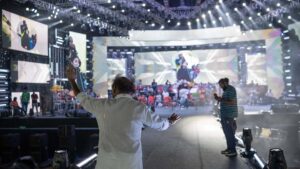
The Science of Perfect Sound: Inside Our Tech Setup for Live Events
Introduction
Every note, beat and phrase during the live concert is more than just simple music; it has emotion. But what seems like a magical experience is backed by science and technique. Every performance is supported by expert teams of technical expertise and sound engineering, ensuring that every beat reaches the audience exactly as intended. At Musico India, this philosophy has been consistently reflected in concerts like Thenisai Thendral Deva, where sound design played a key role in transforming music into an immersive, shared experience.
The value of sound quality can spell success or failure for a musical performance. Consider the quality of a musical performance in which the bass overpowers the guitar riffs and the drums overpower the vocals. A great musical performance can be substandard due to poor sound quality, regardless of the artist’s skill level. Today’s music enthusiast sets high standards when it comes to the quality of sound, and Musico India understands these expectations and works tirelessly to meet them.
In this blog we take you behind the scenes to show how sound quality is shaped, balanced and delivered at Musico India’s concert.
Why Does Sound Matter?
A sound can make or break the concert.
Sound isn’t just about volume. It’s about how music is delivered, experienced, and felt. Even with the exceptional musicians or the most heartfelt performance and lighting spectacle, a concert can fall apart if the sound lacks clarity and balance. According to the research by Marjolein Schippers the sound quality is one of the key predictors of attending the concert, along with the staff and venue.
Poor sound quality can take away the strongest performance. When vocals are buried in the mix and instruments overpower the blend of music rather than cooperate, the overall experience quickly falls apart.
Today’s audiences demand consistency whether they’re in the front row or the back corner, they want to hear the same quality. Great audio levels up event experiences in many ways and provides attendees with a memorable time they won’t soon forget. And those are the standards we hold ourselves to at every Musico event.
Microphones and Capture
It all begins with capturing the sound accurately from the start. Microphones are the artist’s voice, translating raw sound into a form that can be amplified and distributed. From dynamic microphones for high-impact vocals to condensers and wireless systems, each choice is made to accurately reproduce sound. At Musico concerts, microphones are curated to draw out every note so that the audience can connect with quiet passages of Carnatic and vibrant pop anthems
Mixing and Live Engineering
Once captured, sound moves into the hands of live engineers. Mixing a concert is both a technical and musical task. Engineers balance vocals, instruments, and ambient sound while adjusting equalisation, compression, and effects to suit the performance.
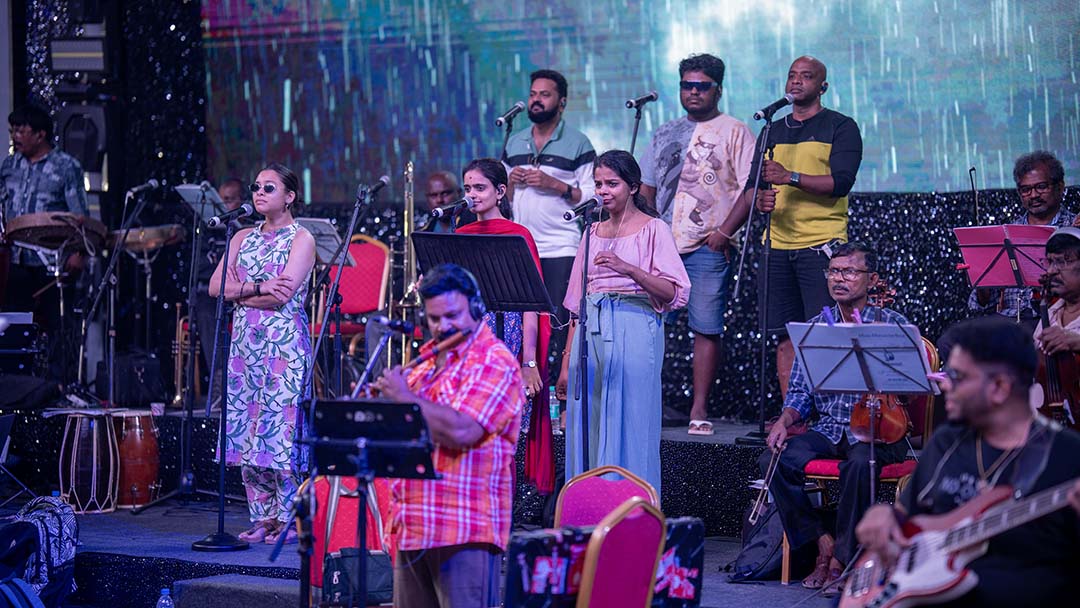
Achieving this level of musical accuracy was particularly crucial at the Thenisai Thendral Deva concert. With an orchestral production and musically complex pieces, it is vital to maintain separation among strings, percussion, and vocals. The final live mix was perfected to retain warmth without covering the vocals or making it sound too warm and sentimental without losing detail. Continued real-time adjustments ensured consistency throughout the performance, adapting smoothly to musical dynamics.
Venue Acoustics and Sound Distribution
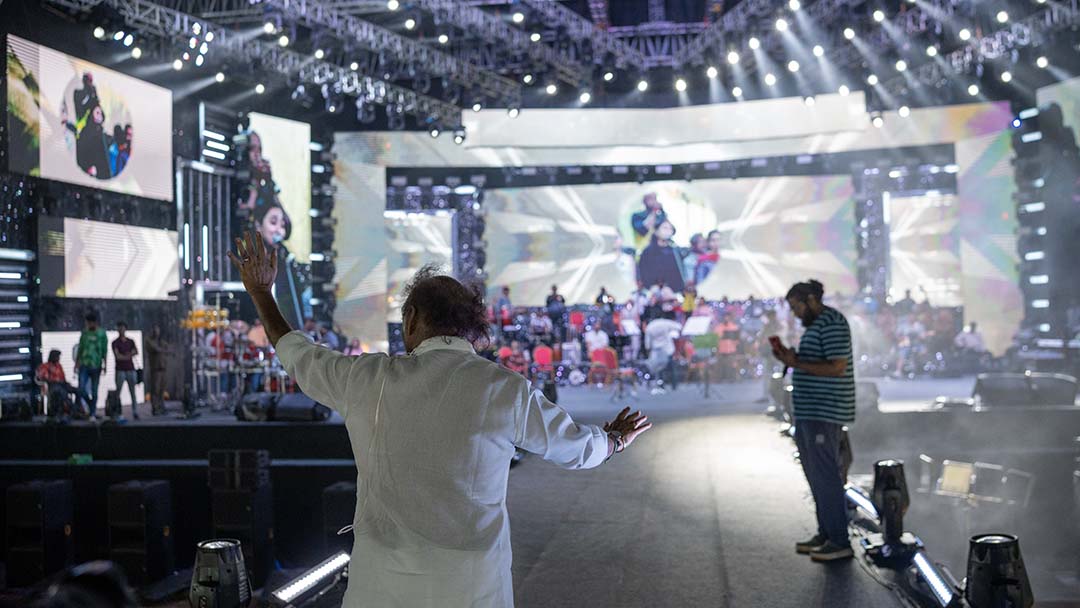
No two venues sound the same. Open spaces, enclosed halls and auditoria or large stadia pose very different acoustic challenges. Sound behaves differently in space, with materials, and depending on how crowded the room is. That’s why speaker placement, delays and subwoofer positioning are all very carefully planned.
At Musico India, all locations are acoustically analysed before the event. The speaker arrays are placed so all listeners hear consistent, natural sound across the venue. The mission is simple: every audience member has to feel equally linked in to the performance, no matter where they’re sitting.
Real-Time Problem Solving
Live concerts are dynamic, and despite careful planning, technical glitches, unplanned schedule changes and new suggestions, such a situation is a natural part of a live concert. A strong concert part can maintain clear communication, remain calm and maintain the collaboration between stage crews and director. Because of this, artists can concentrate entirely on their performance without interruption, maintaining the enthusiasm and passion that the audience expects.
Sound as an Emotional Language of Music
Ultimately, sound is about emotion. When sound is clear, balanced, and immersive, it deepens the artist and audience bond. And when combined with rhythm, lighting, stage visuals and careful production design, sound can turn a concert into a collective emotional journey.
In Musico India performances, lighting cues are based on musical rhythms or a beat; transitions follow emotional highs and lows; and sound dynamics are enhanced to heighten storytelling. Together, these elements transform individual songs into immersive moments that listeners feel and remember well after the last note.
Conclusion
Great concerts don’t just happen; they are engineered.
A live concert’s perfect sound is the result of countless technical decisions and planning. Sound at a musical performance is about bringing a holistic experience. At the Musico concerts, the technology, expertise, and planning come together to create a sound experience that stays with the audience beyond the show. Those who want to experience this in person can attend a Musico India concert and see how sound engineering and music come together live. All the details of the audio and visual inputs are designed to create maximum effects. Don’t miss the “Ilaiyaraaja 50 Live Concert” on 10th January 2026, where decades of musical mastery meet world-class production.